
 Italian
 Climatic Revamping for Full-Vehicle Testing in Extreme Conditions
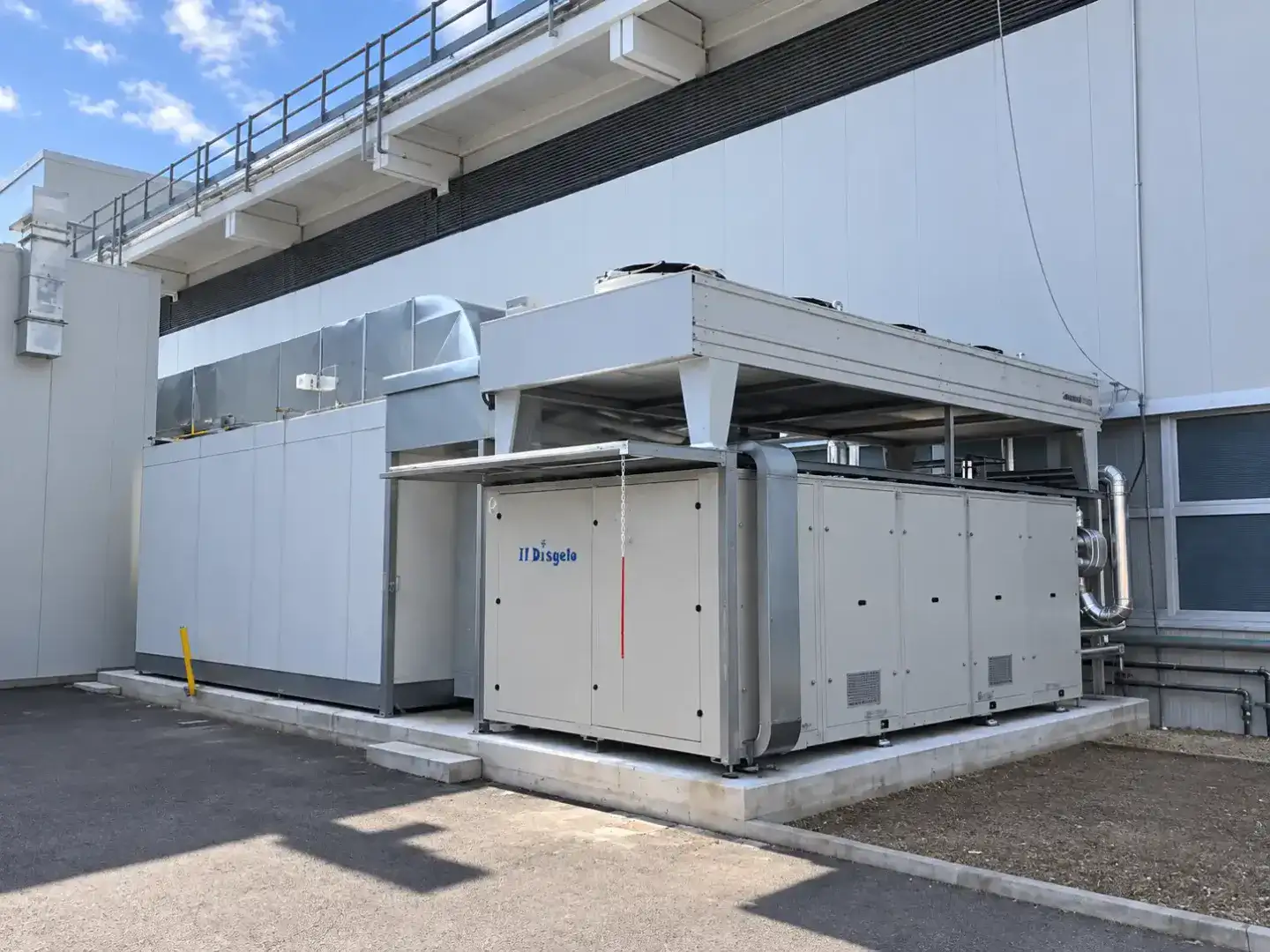
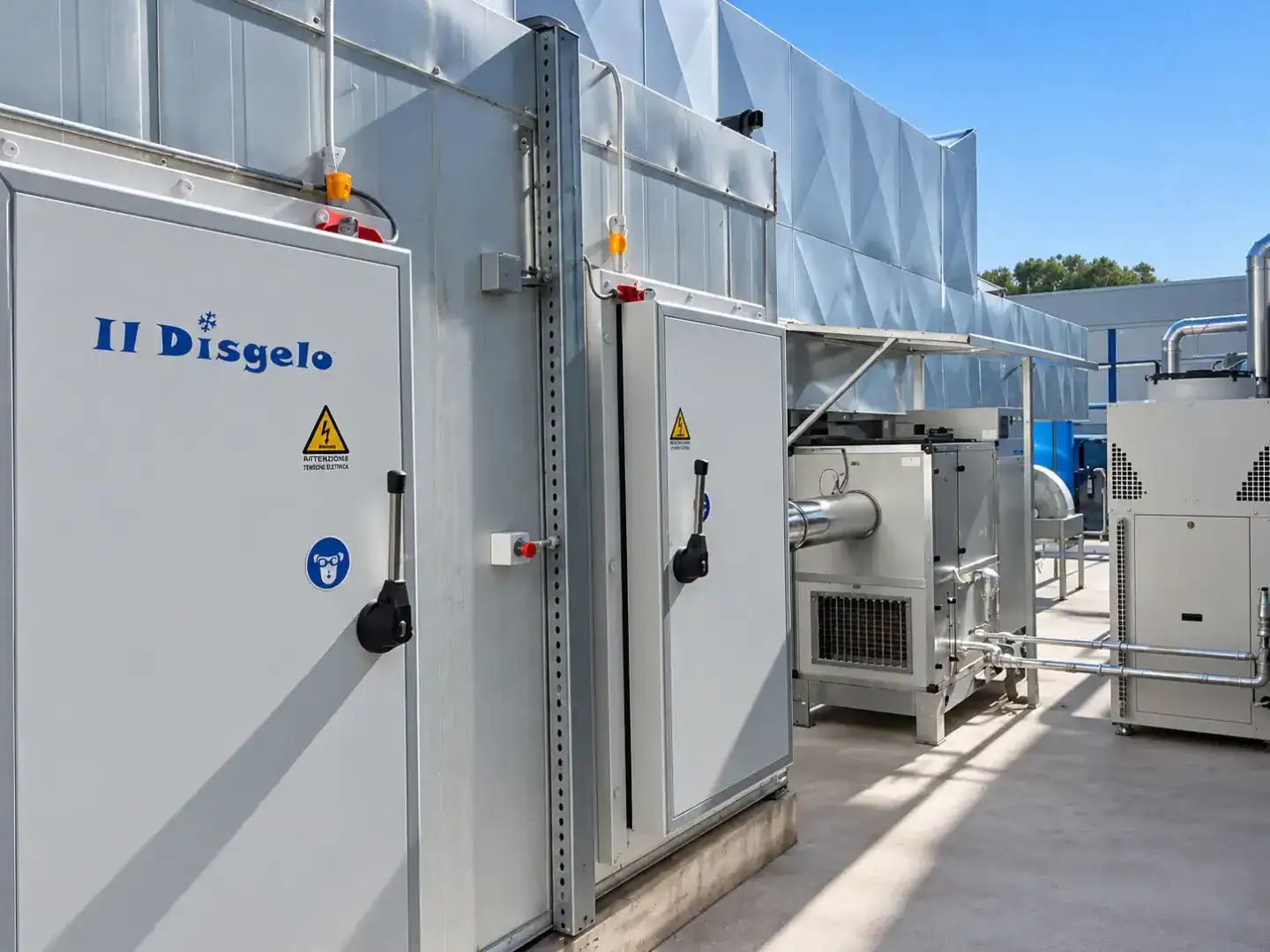
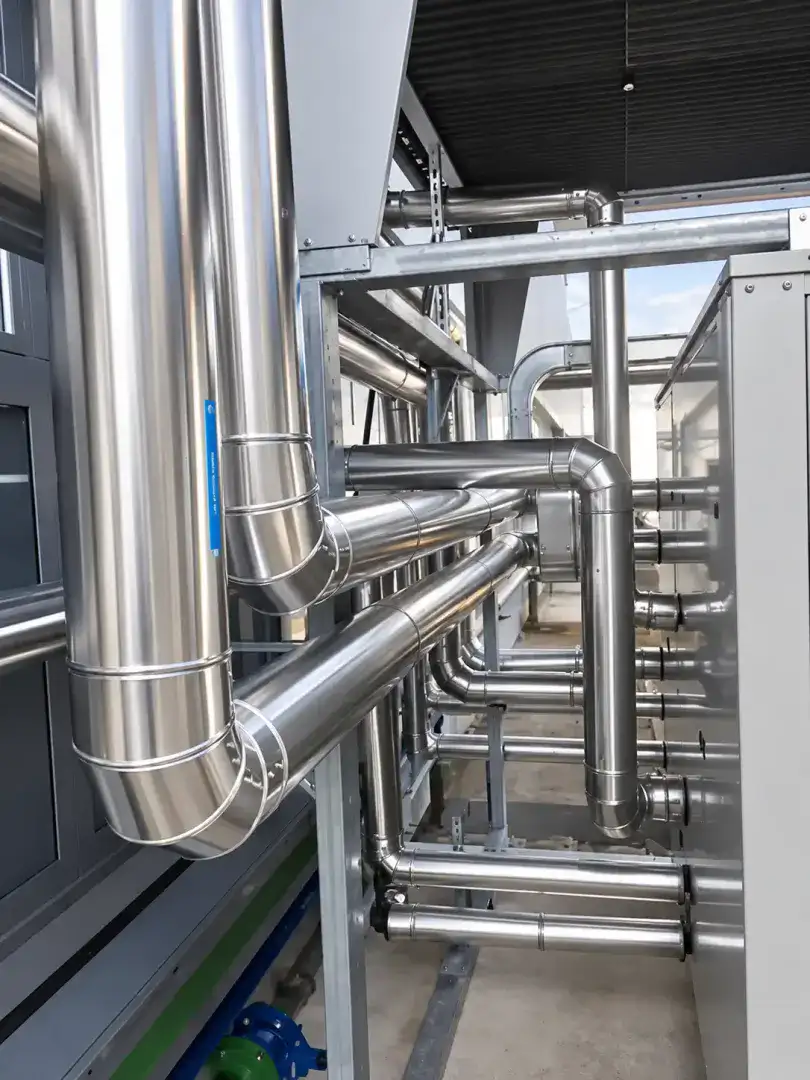
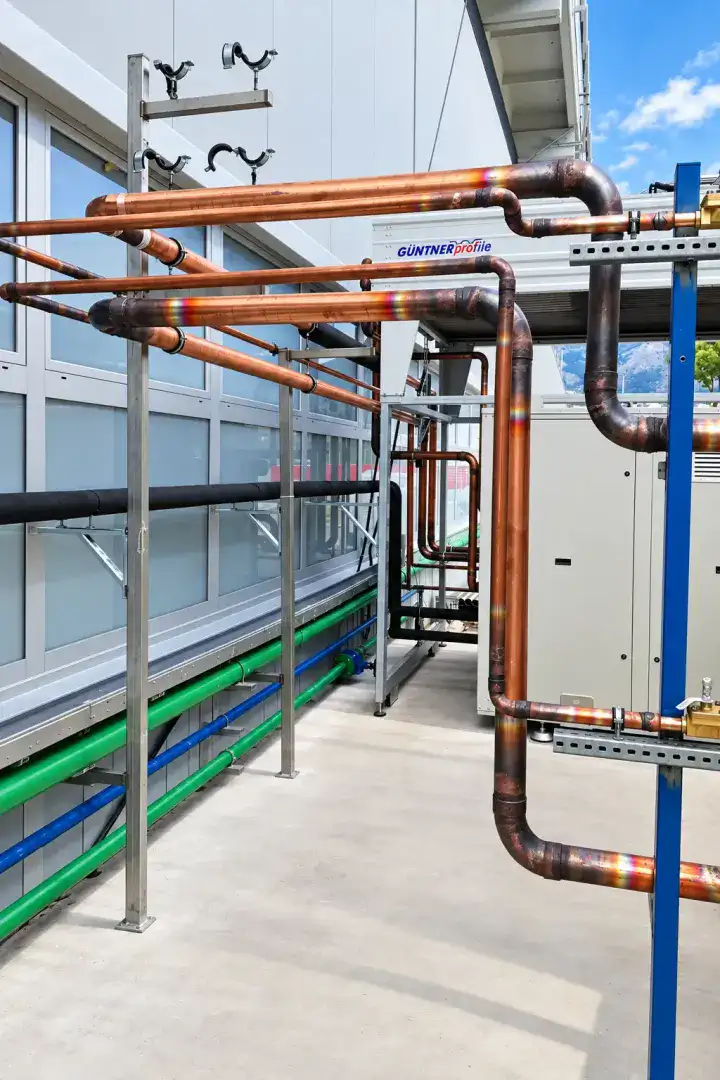
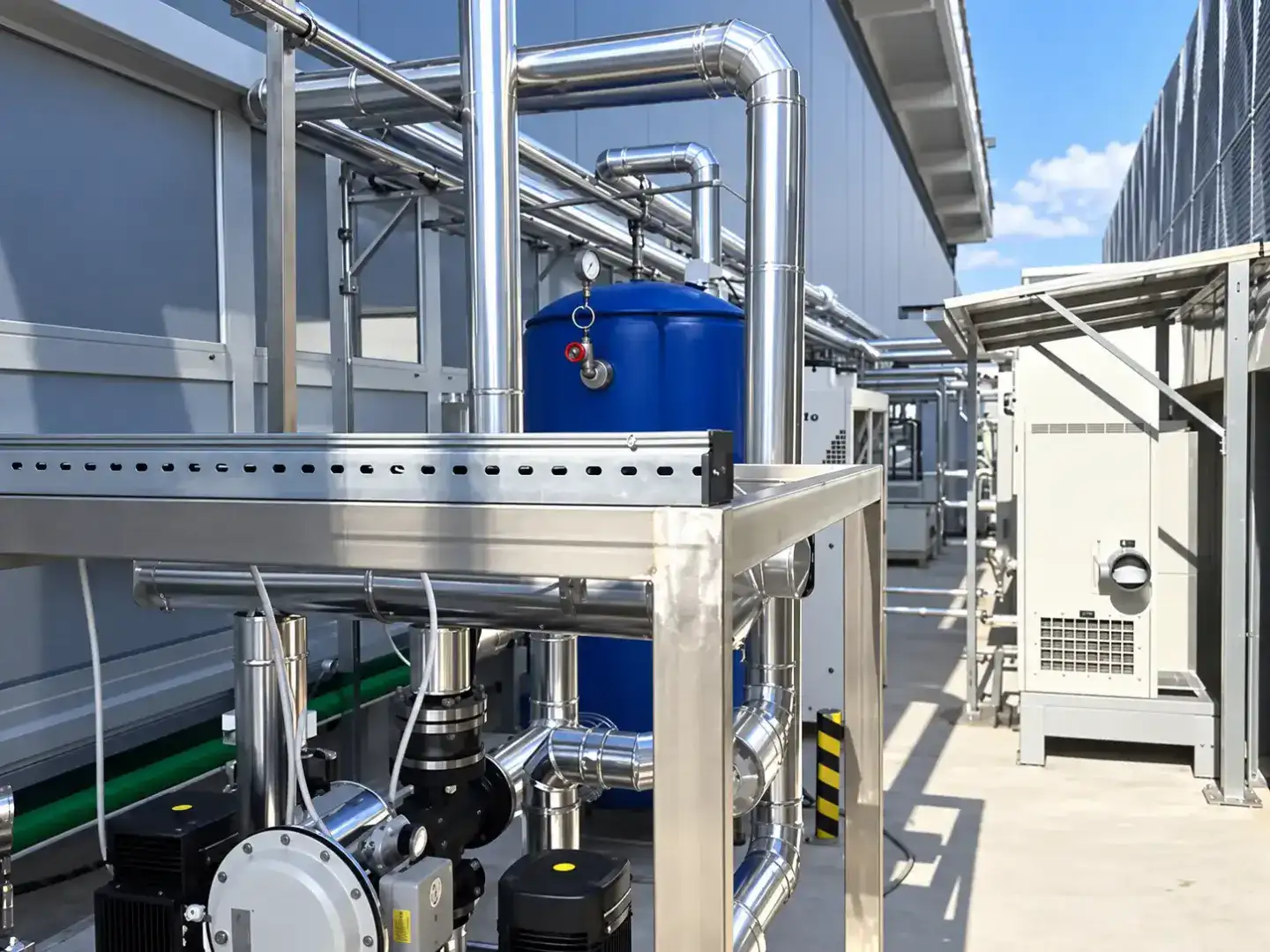
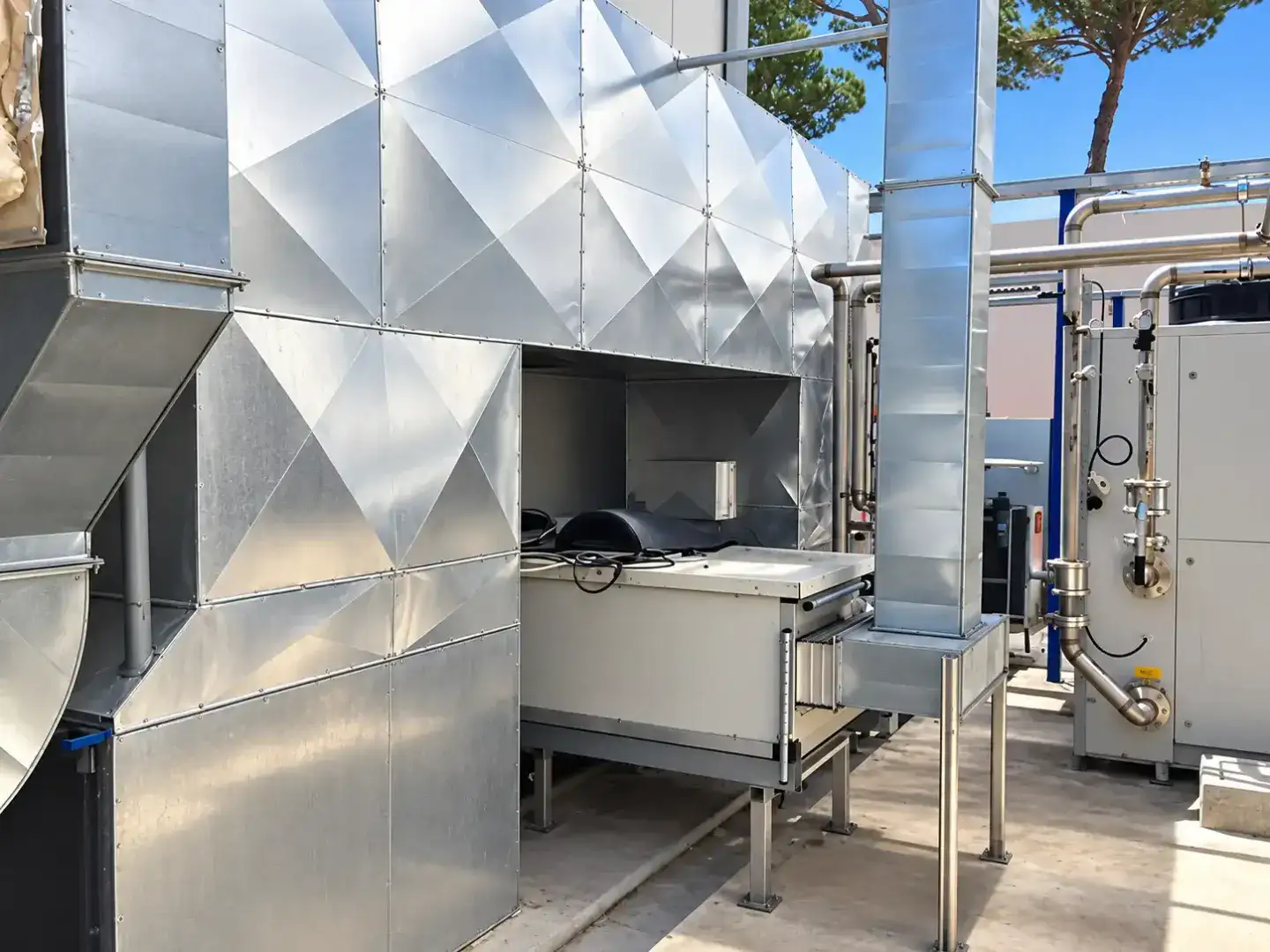
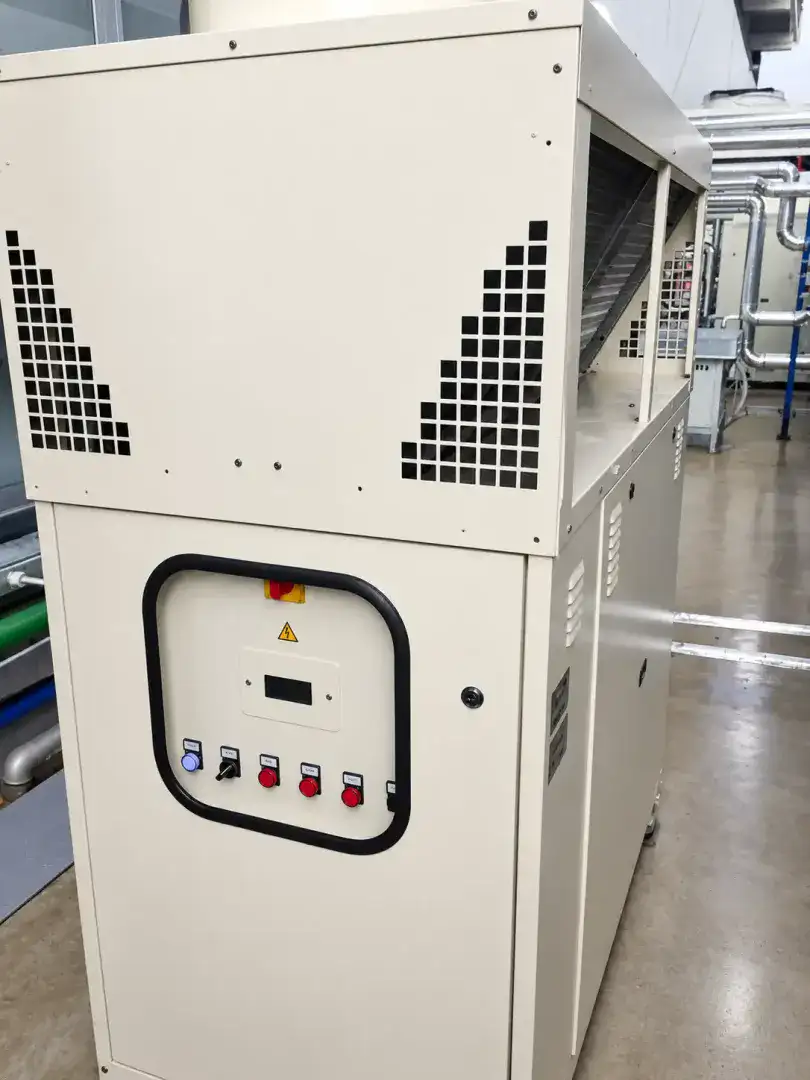
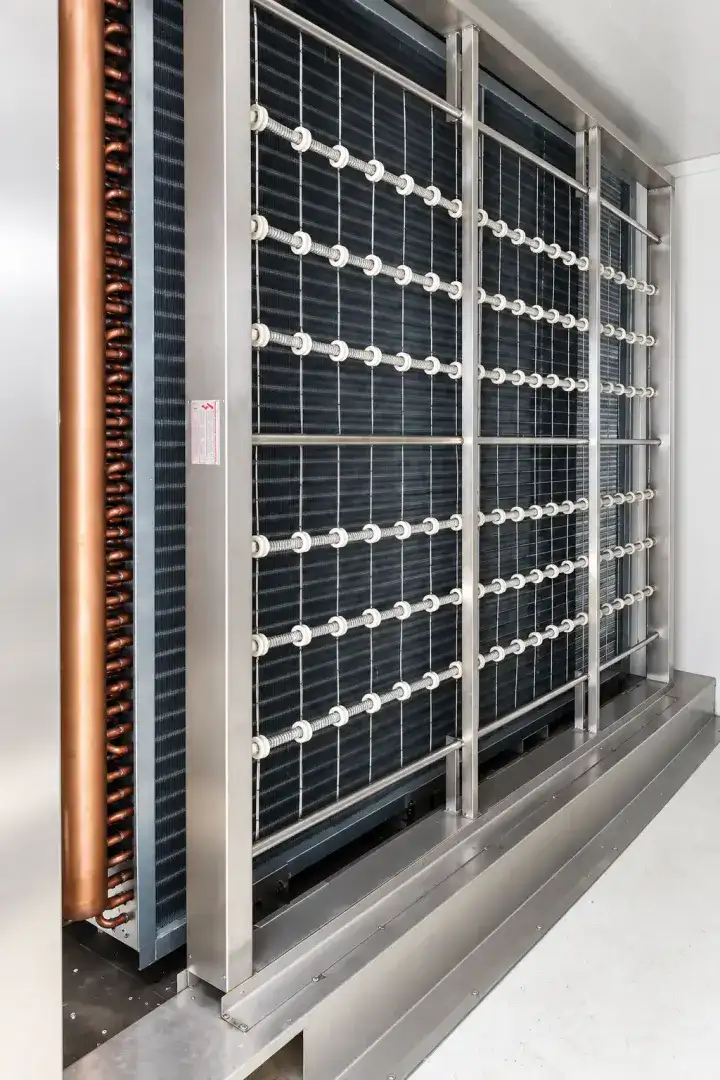
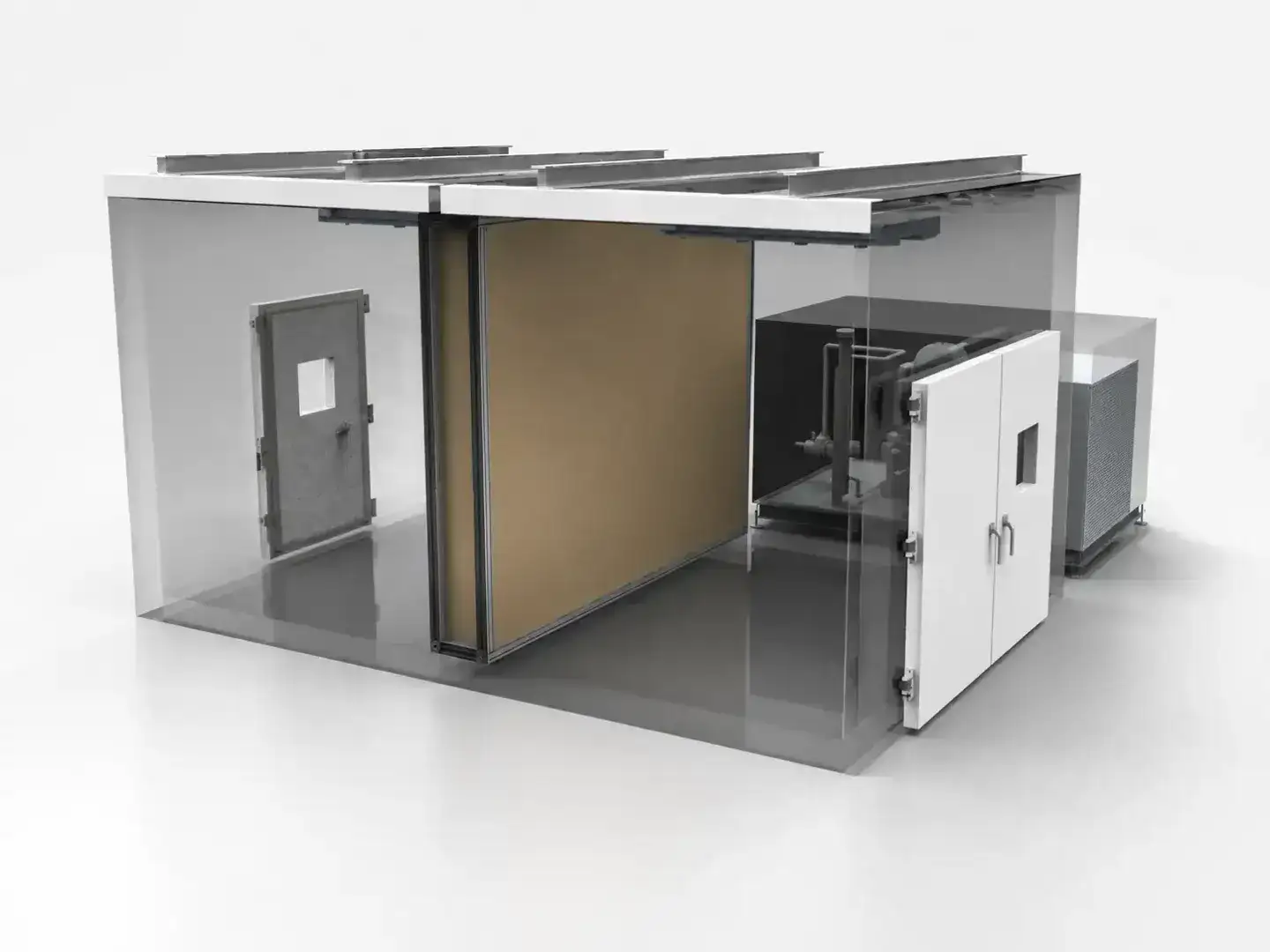
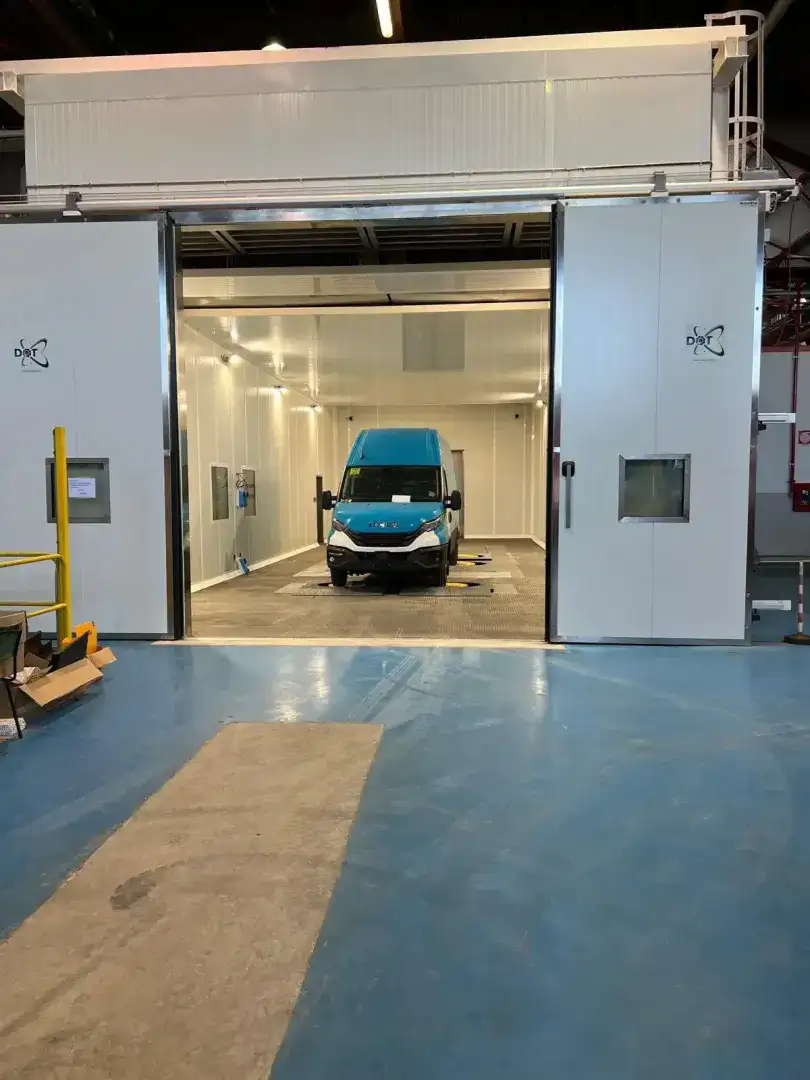
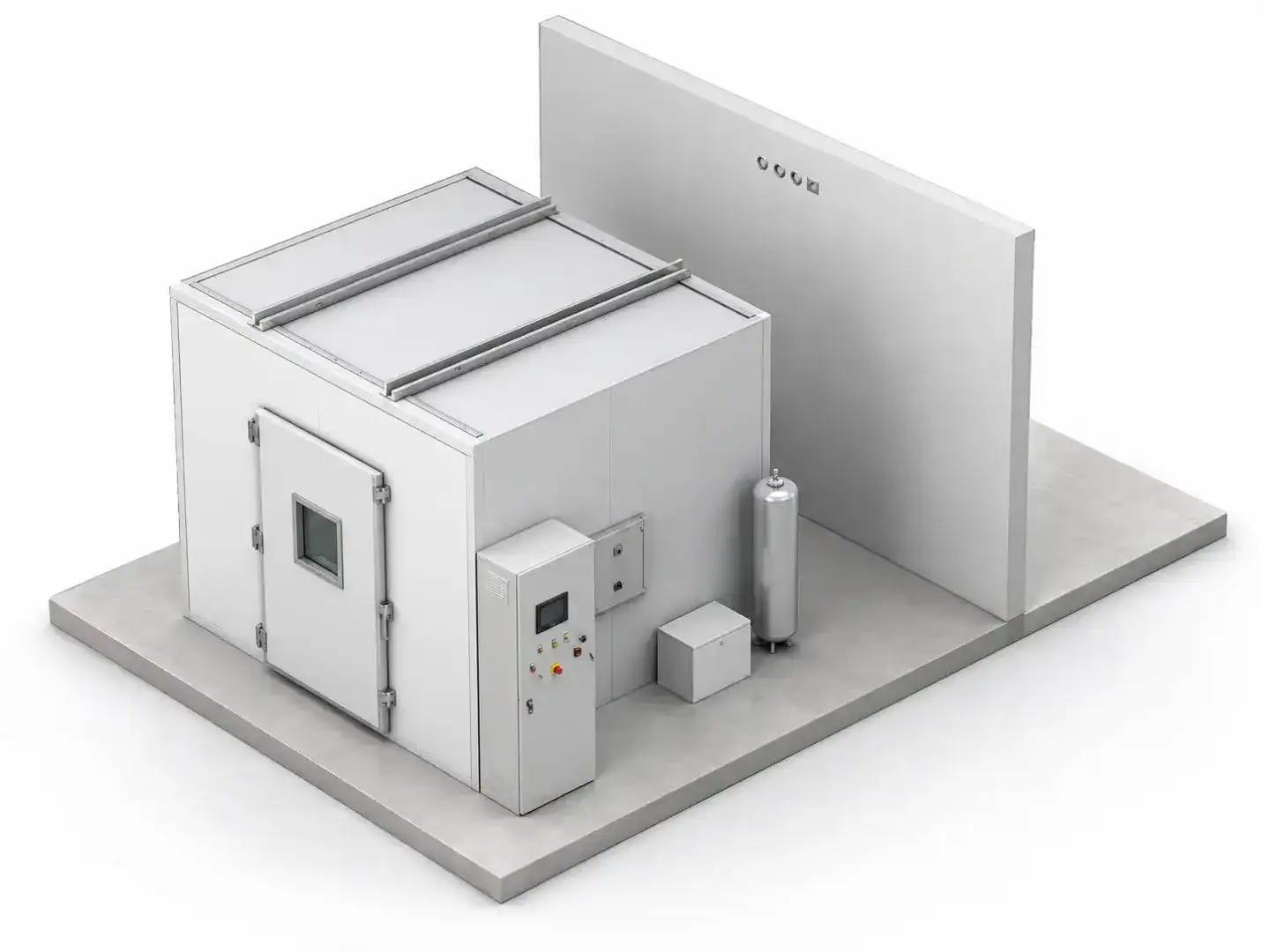
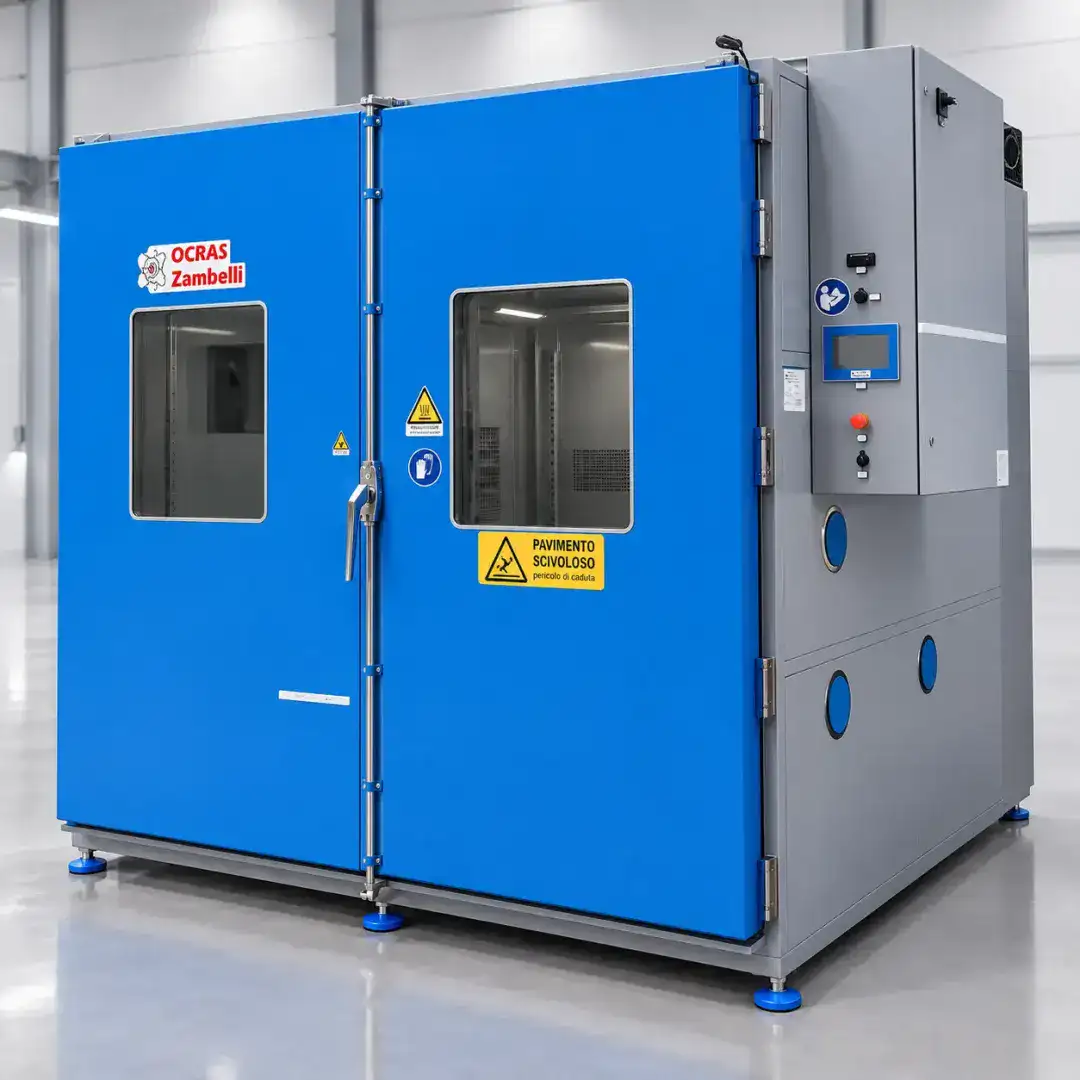
Il Disgelo developed for Stellantis Cassino a complete refurbishment project on an existing climatic test cell of approximately 100 m³, integrated with a 4-Poster test system capable of applying independent vibration inputs to each wheel axis.
The existing chamber structure was retained, while the thermoregulation system was completely redesigned to restore the required performance and, at the same time, improve energy efficiency, reliability and operational continuity.
Developed Solution
The intervention included the replacement of the original refrigeration unit with a new thermoregulation system developed to cover a wide operating range.
The solution uses a combined architecture with direct and indirect cooling, employing specific heat-transfer fluids according to the operating conditions. The system integrates semi-hermetic screw compressors, a shell-and-tube heat exchanger for the secondary-fluid circuit and a custom-built AHU for managing the environmental conditions inside the test cell.
To ensure stable operation even during prolonged tests at low temperatures, the chamber is maintained under positive pressure through a fresh-air circuit equipped with an enthalpy wheel, capable of supplying air with a dew point down to −40 °C and reducing the risk of ice and frost formation.
The system was designed to ensure:
- reuse of the existing climatic chamber structure;
- complete replacement and upgrade of the thermoregulation system;
- integration with the 4-Poster test system;
- climatic control during vibration testing on complete vehicles;
- temperature range from −40 °C to +80 °C;
- relative humidity control within the specified operating range;
- dew point management for prolonged low-temperature tests;
- direct cooling under low-temperature conditions;
- indirect cooling through a heat-transfer fluid circuit over the remaining operating range;
- use of semi-hermetic screw compressors;
- shell-and-tube heat exchanger dedicated to the secondary-fluid circuit;
- custom-designed air handling unit;
- maintenance of slight positive pressure inside the chamber;
- fresh-air treatment with enthalpy-wheel system;
- installation of the main functional components outside the chamber;
- protection of equipment against outdoor weather conditions;
- reduced energy consumption compared with the previous configuration.
Main Technical Data
- customer: Stellantis Cassino;
- test cell volume: approx. 100 m³;
- application: 4-Poster test system;
- temperature range: −40 °C to +80 °C;
- relative humidity range: 20% to 70% RH;
- humidity-control range: approx. +5 °C to +70 °C;
- operating dew point: approx. +4 °C to +49 °C;
- fresh-air dew point: down to −40 °C;
- direct cooling: used to achieve low temperatures down to −40 °C;
- indirect cooling: via heat-transfer fluid circuit for management of the remaining temperature range;
- compressors: semi-hermetic screw type;
- heat exchanger: shell-and-tube evaporator for the secondary fluid;
- air treatment: custom AHU;
- fresh-air system: enthalpy-wheel system;
- system layout: main functional components installed outside the test cell;
- existing structure: retained and reused.
Result
The project enabled Stellantis Cassino to recover and upgrade an existing 100 m³ climatic test cell, avoiding complete replacement of the chamber structure and concentrating the intervention on the plant engineering and thermoregulation systems.
The new architecture makes it possible to combine climatic and vibration testing with a 4-Poster system, maintaining stable environmental conditions even during prolonged low-temperature tests while improving energy efficiency, reliability and operational safety.
Recent Articles