
 Italian


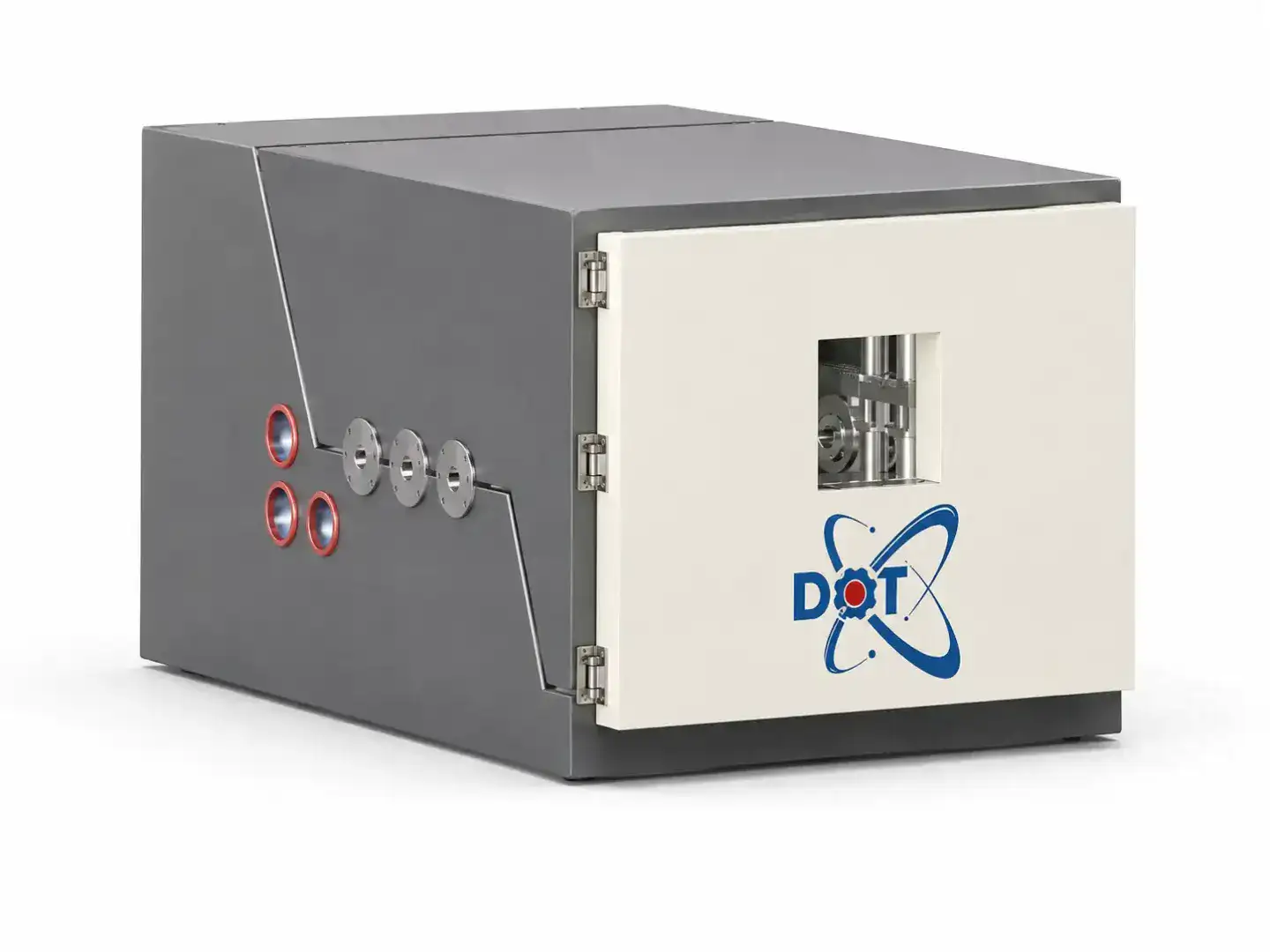
The DOT TCEM | 2.9–4.0 m³ represents a specialised climatic testing solution within the TCEM range, designed to perform thermal and climatic tests on e-Axle systems, integrated motor-transmission assemblies and electric powertrains subjected to dynamic loads.
The platform is available in the 2.9 m³ configuration, developed for functional testing, durability testing and thermal cycling, and in the 4.0 m³ configuration with Z-axis, designed to provide greater flexibility when integrating with different dynamometer test-bench layouts.
Both versions share the same DOT construction and control philosophy and can be configured according to the characteristics of the system under test, the required performance and the test-bench layout.
The usable volume allows the installation of complete e-Axle systems, motor-transmission assemblies and integrated mechanical systems, with the possibility of connecting the chamber to dynamometers, drive shafts, cooling circuits, wiring, data-acquisition systems and dedicated equipment.
The high-rigidity structure and dedicated interfaces make it possible to manage the mechanical loads and torque generated by the system during testing, while also facilitating installation, alignment and maintenance operations.
In the 4.0 m³ configuration, the Z-axis arrangement allows the position of the system under test to be adapted to the different operating heights required by the dynamometer test bench.
Are designed to ensure:
- direct integration with automotive dynamometers and test benches;
- installation of e-Axle systems and integrated motor-transmission assemblies;
- availability in 2.9 m³ and 4.0 m³ configurations with Z-axis;
- adaptation of the system under test to the dynamometer test-bench configuration;
- execution of functional tests, durability tests and dynamic climatic cycles;
- coordinated control of temperature and humidity;
- management of the thermal loads generated by the system under test;
- high stability and uniformity of climatic conditions;
- precision and repeatability of results over time;
- management of mechanical loads and drive torque;
- integration of drive shafts, wiring and service circuits;
- integration with data-acquisition systems and dedicated equipment;
- configuration of specific interfaces, interlocks and safety devices;
- supervision, data logging and remote management through DOT technology.
It is particularly suitable for laboratories, testing centres and research and development departments operating in the automotive, electric mobility, motorsport, railway and industrial powertrain sectors.
The customised design allows each chamber to be configured according to the dimensions and characteristics of the system under test, the loads generated during testing, the dynamometer test-bench configuration, the required operating heights, performance requirements, necessary interfaces and the specific constraints of the installation area.
- Available usable volumes: 2.9 m³ and 4.0 m³;
- indicative internal dimensions – 2.9 m³: 1,695 × 1,332 × 1,300 mm;
- indicative internal dimensions – 4.0 m³: 1,695 × 1,780 × 1,300 mm;
- 4.0 m³ configuration: Z-axis arrangement;
- temperature range: −40 °C to +90 °C;
- climatic temperature range: +10 °C to +90 °C;
- relative humidity range: 20% to 95% RH;
- indicative temperature change rate: up to approximately 4 K/min in heating and cooling;
- temperature accuracy over time: up to ±0.5 °C;
- reference heat-load capacity: up to 1.5 kW at −40 °C;
- internal construction: AISI 304 stainless steel;
- insulation: high-efficiency thermal insulation;
- interfaces: configurable feedthroughs for shafts, wiring, sensors and fluids;
- control system: DOT PLC with proprietary CliMaLogic® software;
- connectivity: Ethernet, Modbus TCP/IP, data logging and remote supervision; CAN communication available depending on the required integration.
Configurable data
The values shown represent a reference technical configuration. Dimensions, performance, heat-load capacity, Z-axis configuration, refrigeration system, shaft feedthroughs and interfaces are defined according to the system under test, the dynamometer test bench and the customer’s specific requirements.
TCEM chambers are special chambers: they are fully customized at the quotation stage, according to the customer’s needs and the test to be performed, including custom writing and chamber colors.
Related case histories